
24KBet Card Games is a topic that helps readers understand how online card games work through rules, probability, and decision quality. Baccarat, blackjack, and poker have different structures, ranging from Player and Banker choices to basic strategy, hand rankings, pot odds, and equity. Concepts such as house edge, expected value, and variance make game evaluation more systematic instead of relying only on intuition. However, no strategy can completely eliminate risk, so bankroll management, stake sizing, and emotional control remain important principles.
Exploring Games in 24KBet Card Games
Online card games include many formats with different rules, payout structures, and levels of skill involvement. When exploring 24KBet Card Games, players should distinguish baccarat, blackjack, and poker based on decision-making, house edge, and the degree of interaction with opponents. Each game has its own mechanics, so the same approach will not work equally well in every situation.
Baccarat with Player, Banker, and Tie
Baccarat generally revolves around three main choices: Player, Banker, and Tie. The third-card rule determines when either side receives another card, so players have very little direct influence over the dealing process.
Banker bets often involve a commission when they win, while Tie bets usually offer higher payouts but occur far less frequently. Looking only at payout size while ignoring probability can create a misleading view of actual risk.
In 24KBet Card Games, players should review the house edge, table limits, and payout rules before wagering. A sequence of Banker or Player results does not prove that the same outcome will continue in the next hand.
Blackjack and Basic Strategy
Blackjack requires more decision-making than baccarat. Players can hit, stand, double, or split depending on their current total and the dealer’s visible card.
Basic strategy is built on probability and is designed to support more rational choices. Soft hands and hard hands should be handled differently because an Ace can carry more than one value in the same hand.
When approaching 24KBet Card Games, players should review dealer rules, blackjack payouts, and conditions for doubling or splitting. Even a small change in table rules can affect the house edge and expected value of each decision.
Poker and the Value of Hand Rankings
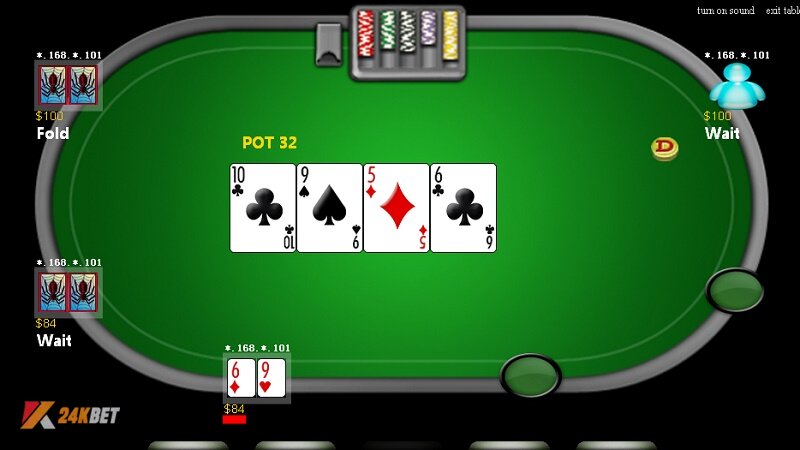
Poker differs from many casino card games because results depend not only on the cards but also on how players respond to their opponents.
Hand rankings determine the relative strength of each combination, while position affects how much information is available before acting. Starting hands, ranges, pot size, and community cards all influence decisions to call, fold, or raise.
In 24KBet Card Games, bluffing should not be viewed as the only factor that determines playing quality. Evaluating ranges, reading equity, and controlling pot size are often more important than making large bets without a solid basis.
Analyzing Probability in 24KBet Card Games

Probability is the foundation for understanding how card games behave over the long term. With 24KBet Card Games, house edge, odds, and expected value help players evaluate decisions more systematically. However, variance can still make short-term results differ significantly from expectations, even when the original choice was reasonable.
House Edge and Probability in Card Games
House edge is the mathematical advantage built into many casino games. This advantage varies depending on the game, betting option, and table rules.
In baccarat, Banker, Player, and Tie have different winning probabilities. In blackjack, decisions such as hit or stand can directly affect the risk of busting and the expected outcome of a hand.
When evaluating 24KBet Card Games, players should distinguish probability from certainty. A choice with a higher chance of success can still lose in a specific round because short-term results are influenced by variance and random outcomes.
Pot Odds, Equity, and Expected Value
Pot odds describe the relationship between the amount required to continue and the current size of the pot. Equity represents the theoretical share of value a hand can expect based on its chance of winning.
If equity is higher than the threshold implied by pot odds, calling may be mathematically reasonable. Implied odds extend this analysis by considering additional chips that may be won in later betting rounds.
In 24KBet Card Games, expected value helps measure decision quality over the long term. A positive-EV choice can still lose in a particular hand, so an entire strategy should not be judged from one isolated result.
Martingale and the Risks of Increasing Stakes

Martingale is a system that increases the stake after each loss in the hope that the next win will recover previous losses. Fibonacci and other progressive betting systems also adjust wager sizes according to result sequences.
The problem is that losing streaks can continue, causing rapid bankroll depletion. Table limits may also prevent players from continuing to increase their stakes as planned.
In 24KBet Card Games, these systems do not change the house edge or the probability of an independent round. Increasing stakes to recover losses can quickly turn into chasing losses and significantly increase financial risk.
Managing Risk in 24KBet Card Games
Understanding rules and probability is only truly useful when combined with sensible bankroll management. With 24KBet Card Games, bankroll management, buy-ins, and stake sizing help players maintain a clearer financial structure. Controlling tilt and decision fatigue is also important for reducing undisciplined choices during long sessions.
Building a Bankroll and Controlling Buy-Ins
A bankroll is a separate entertainment budget and should remain distinct from living expenses, bills, and essential financial obligations.
In poker, buy-ins should be appropriate for the total bankroll. In baccarat and blackjack, players can divide their funds into betting units to maintain consistent stake sizes from hand to hand.
When participating in 24KBet Card Games, profit-and-loss tracking and stop-loss limits help provide a more objective view of results. Going all-in outside the original plan or suddenly increasing stakes can sharply increase variance and cause the bankroll to decline quickly.
Controlling Tilt and Chasing Losses
Tilt is an emotional state that reduces decision quality after an unfavorable result. Players may begin revenge betting, increasing stakes, or entering more hands than usual.
Winning streaks can also create overconfidence and lead players to overestimate their skill. During long sessions, decision fatigue can further reduce analytical quality.
In 24KBet Card Games, taking breaks between sessions and keeping stake limits unchanged can reduce the influence of emotion. When the goal shifts from following a plan to recovering lost money, stopping is usually the more sensible choice.
Practicing Responsible Card Gaming
Online card games are entertainment activities involving financial risk, not reliable sources of income. Participants should meet legal age requirements and comply with regulations applicable in their jurisdiction.
Players should not borrow money to gamble, use funds intended for essential needs, or continue when card gaming begins to interfere with work or personal life.
If a platform provides deposit limits, time limits, or self-exclusion tools, users may consider using them to support better behavioral control.
A responsible approach to 24KBet Card Games should prioritize budget limits, realistic expectations, and the ability to stop voluntarily when necessary — visit 24kbet.
Conclusion: A Balanced 24KBet Card Games Approach
24KBet Card Games can be understood more comprehensively through baccarat, blackjack, poker, and concepts such as house edge, pot odds, equity, and expected value. Basic strategy and probability analysis can improve decision quality but cannot remove variance or risk. Managing bankrolls, buy-ins, stakes, and emotions remains important for maintaining a more balanced approach to online card gaming.